

By Rolla Hassan, Ph.D.
Introduction
Edge computing entails the strategic relocation of computing resources, including storage and networking capabilities, away from centralized public or private cloud infrastructures to the periphery of the network. This relocation aims to bring resources into closer proximity to end-users and devices, directly at the point where data is generated. The concept of edge computing, often described as “processing at the edge,” heralds a significant paradigm shift in business operations, promising to reshape organizational structures and redefine service delivery mechanisms. Positioned as an integral component of distributed computing models, edge computing facilitates information processing near the sources of data generation and consumption, namely, devices and individuals. This architectural approach not only fosters enhanced operational efficiency but also unlocks novel avenues for personalized and responsive service provision to customers.
Edge computing is currently in its early stages of development, with the community yet to establish standardized definitions, network architectures, and protocols. Within the realm of edge computing, various architectural frameworks exist, and the lines between them are often blurred:
Fog computing, a term coined by Cisco in 2014, involves the decentralization of computing infrastructure by strategically positioning nodes between the cloud and edge devices, thereby extending the reach of the cloud.
Multi-access edge computing (MEC), as defined by the European Telecommunications Standards Institute (ETSI), provides cloud computing capabilities and an IT service environment at the edge of the mobile network, offering application developers and content providers enhanced accessibility to computing resources.
Cloudlets are small-scale data centers strategically located near edge devices, enabling them to offload processing tasks. Serving as an extension of cloud computing infrastructure, cloudlets enhance mobility and facilitate efficient processing at the edge.
Micro data centers represent another facet of edge computing, serving as compact extensions of hyperscale cloud data centers. Equipped with all necessary computing, storage, networking, power, and cooling components, micro data centers are designed to efficiently handle specific workloads at the edge.
Why does it matter now?
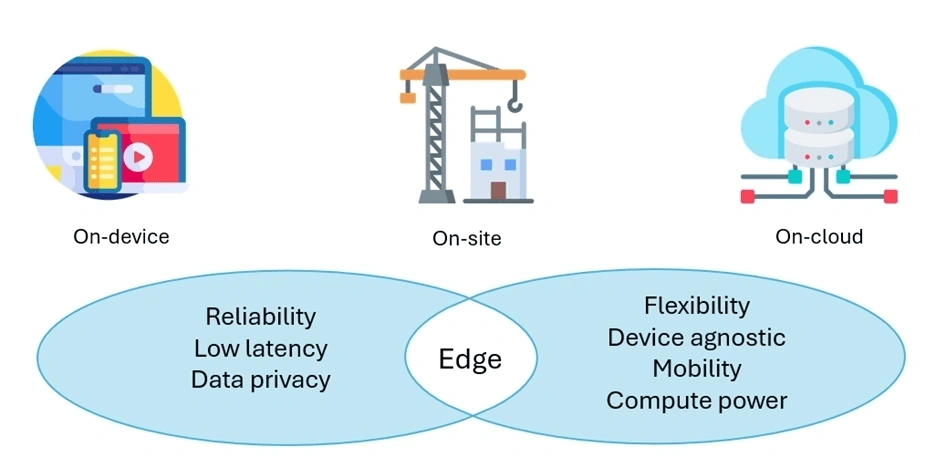
The edge computing concept has been around for a while and has evolved within the 3GPP and IEE standards. With the latest advances in wireless technologies, edge is now in the spotlight. Edge computing enables artificial intelligence (AI) large language models (LLMs) embedded within computing to bring functionality to software not previously possible. It provides IoT with improved speeds, reduced latency and real-time response, as data can be processed locally without being sent to a centralised public or private cloud.
Differences between Edge and Cloud computing
Edge Computing
Definition: Edge computing involves processing data closer to the source of data generation rather than relying solely on a centralized data processing infrastructure like the cloud. This can involve processing data on devices themselves or on local servers and gateways.
Differences:
- Proximity to Data Source: Edge computing focuses on processing data as close to the source as possible, reducing latency and bandwidth requirements by handling data locally.
- Decentralized: Unlike cloud computing, which relies on centralized data centers, edge computing distributes processing power across various devices and nodes.
- Real-time Processing: Edge computing is often used for applications requiring real-time or near-real-time processing, such as IoT devices, autonomous vehicles, and industrial automation.
Similarities
- Data Processing: Both edge and cloud computing involve processing data, albeit in different locations and with different levels of latency.
- Connectivity: Both paradigms rely on network connectivity, though edge computing often operates with intermittent or limited connectivity.
Pros of Edge Computing
- Low Latency: Processing data closer to the source reduces latency, making it suitable for applications requiring quick response times.
- Reduced Bandwidth: Edge computing can help reduce bandwidth usage by processing data locally, sending only relevant information to the cloud.
- Privacy and Security: Edge computing can enhance privacy and security by keeping sensitive data localized rather than transmitting it over networks to distant data centers.
Cons of Edge Computing
- Limited Resources: Edge devices often have limited processing power and storage compared to cloud servers, limiting the complexity of tasks they can perform.
- Management Complexity: Managing a distributed edge computing infrastructure can be more complex than managing centralized cloud resources.
- Scalability Challenges: Scaling edge computing deployments across a large number of devices or locations can be challenging due to factors like management overhead and resource constraints.
Cloud Computing
Definition: Cloud computing involves delivering various computing services over the internet, including storage, processing power, and software applications, on-demand to users and organizations.
Differences
- Centralized: Cloud computing relies on centralized data centers managed by cloud service providers, where data is stored, processed, and accessed remotely.
- Scalability: Cloud computing offers virtually limitless scalability, allowing users to easily scale resources up or down based on demand.
- Global Accessibility: Cloud services are accessible from anywhere with an internet connection, making them suitable for distributed teams and applications.
Pros of Cloud Computing
- Scalability: Cloud computing offers unparalleled scalability, allowing users to rapidly scale resources up or down to meet changing demand.
- Resource Accessibility: Cloud services are accessible from anywhere with an internet connection, enabling remote access and collaboration.
- Cost Efficiency: Cloud computing often offers cost efficiencies through pay-as-you-go pricing models, eliminating the need for upfront hardware investments and allowing users to only pay for the resources they consume.
Cons of Cloud Computing
- Latency: Processing data in the cloud can introduce latency, especially for applications requiring real-time or near-real-time responsiveness.
- Security Concerns: Storing data in remote data centers can raise security concerns, particularly for sensitive or regulated data.
- Dependence on Internet Connectivity: Cloud computing relies on internet connectivity, making it vulnerable to outages or disruptions in network connectivity.
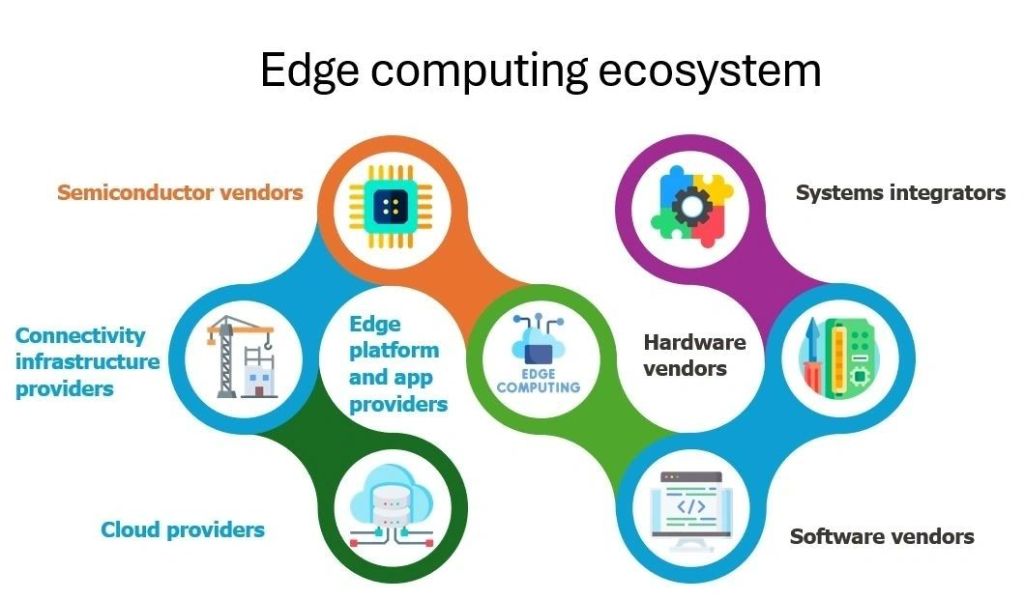
Edge computing ecosystem
The ecosystem for edge computing is diverse, with multiple stakeholders jostling for position. It is a fragmented landscape with network equipment vendors, operators, service providers, hyperscalers and others with product and service offerings.
Scenarios for building the network edge
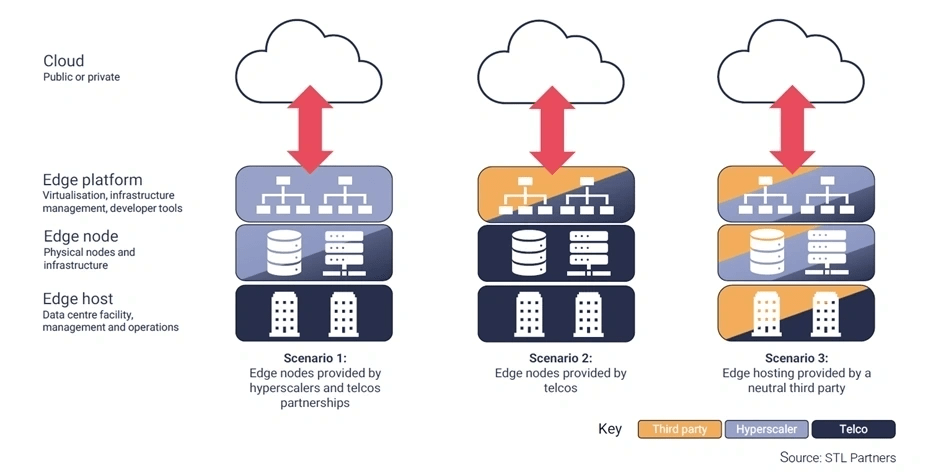
In Scenario 1
Hyperscale cloud providers extend their offerings to edge platforms, aiming to ensure consistent global developer experiences through familiar tools like portals, CLIs, and APIs. Telcos, in this model, serve as physical hosts for edge workloads and facilitate local network traffic breakout to the hyperscaler’s full stack of hardware and software, essentially acting as colocation providers. This approach mirrors AWS Wavelength deployments, where telcos often serve as both infrastructure hosts and sales channels. Interoperability at the edge is managed similarly to cloud environments, with hyperscalers partnering with various telcos to offer a seamless experience for enterprises and developers. While this scenario aligns with current trends, its success relies on substantial investment from hyperscalers, who must decide whether to engage with smaller operators beyond tier one partnerships.
In Scenario 2
Telecom operators offer consistent user experiences through federated edge programs, enabling developers to seamlessly access edge clouds across multiple telcos. In this model, telcos provide the physical infrastructure and hardware required for edge workloads, either partnering with third-party edge platform providers or developing their own platforms. To ensure global accessibility, telcos facilitate customer “roaming” onto other operators’ edge clouds, akin to intercarrier roaming settlements, enabling users to access resources through a single operator’s portal. Trials for this federated edge concept have been conducted by telcos like Singtel and Telefónica, primarily focusing on technical aspects rather than commercial mechanisms and involving non-competing telcos. However, the feasibility of competitive telcos allowing customers to utilize each other’s resources seamlessly remains uncertain, as demonstrated by potential challenges between companies like Verizon and AT&T.
In Scenario 3
A third party steps in to provide expertise and investment to enable network sites to support third-party compute workloads. Two models are currently under exploration: AtlasEdge, a collaboration between Liberty Global and DigitalBridge in Europe, where a neutral third-party entity facilitates edge hosting, allowing local traffic breakout to AtlasEdge sites; and Vapor.io’s partnership with Comcast in the US, where Comcast remains the host but works with Vapor.io instead of a hyperscaler to provide edge nodes and platforms. Despite the promise of these models in rapidly establishing edge sites, challenges associated with edge federation persist, and their ability to attract other cloud service providers to convert their sites into carrier-neutral locations remains uncertain. Achieving a truly interoperable network edge requires a significant cultural shift within telcos, emphasizing collaboration with partners to foster ecosystems and prioritizing openness through an API-first approach.
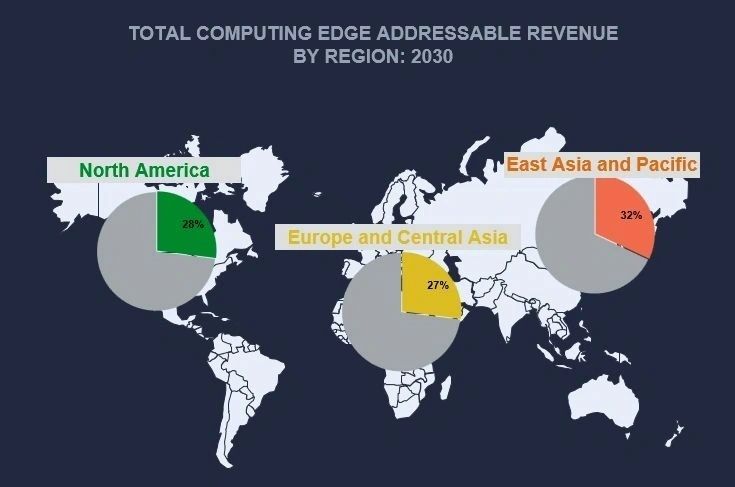
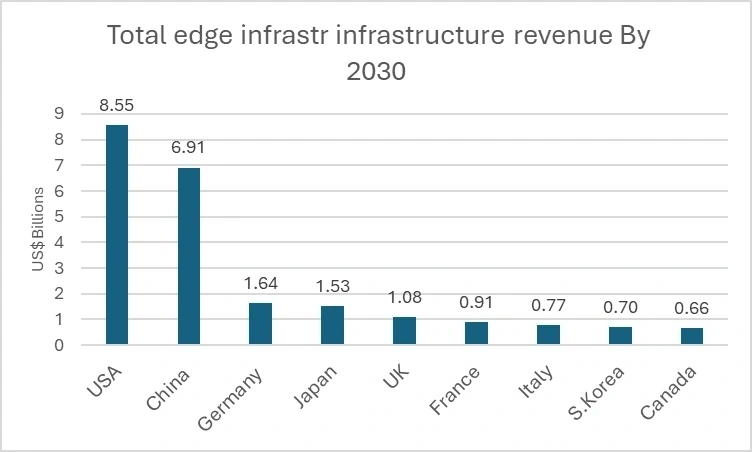
According to STL Partners “Edge revenue will remain concentrated in high-income highly digitized economies throughout the forecast period”.


 Telecom Analysis
Leave a comment