
By Rolla Hassan, Ph.D
Introduction
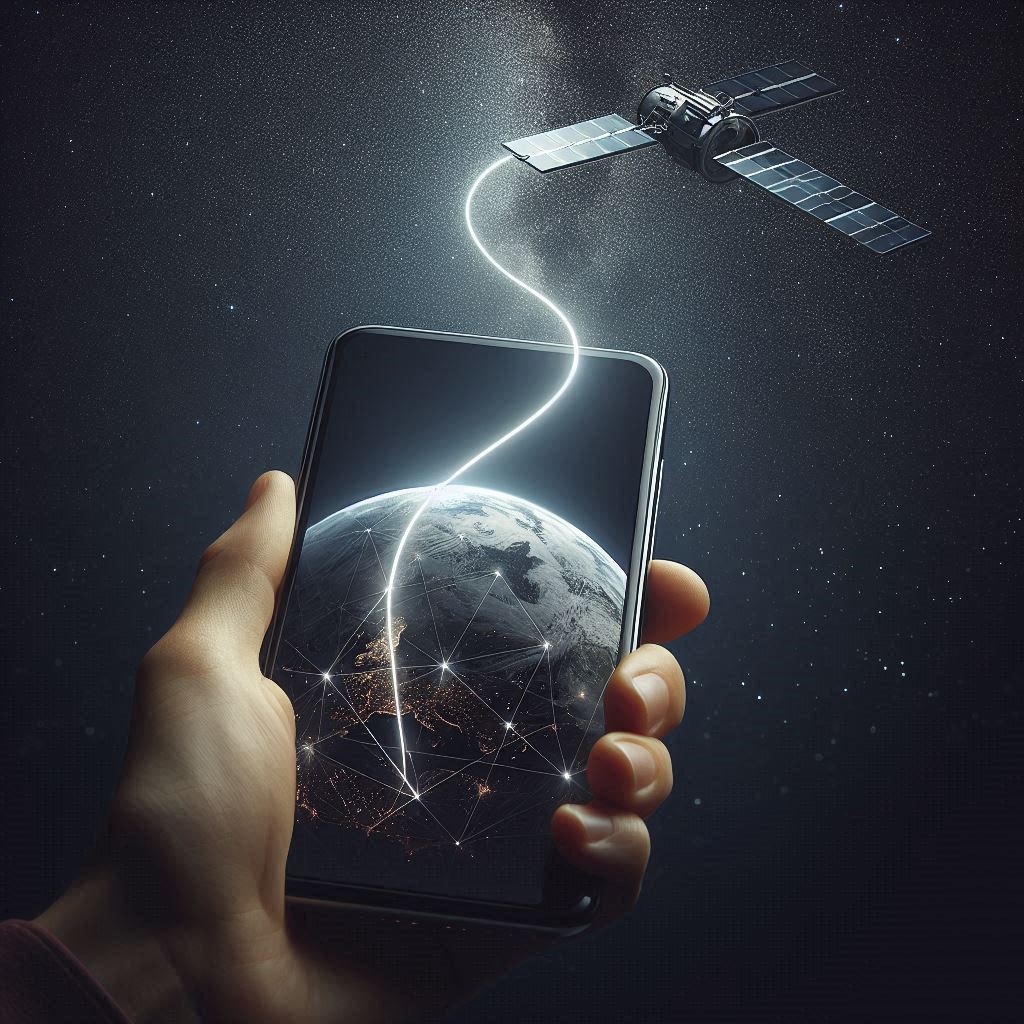
Satellite direct-to-device (D2D) technology refers to a method of satellite communication where data is transmitted directly from a satellite to a specific device, such as a smartphone, tablet, or specialized receiver, without the need for intermediary ground stations or infrastructure. This technology allows for direct communication between the satellite and the end-user device, enabling various applications such as satellite internet access, broadcasting, emergency communication, and asset tracking.
Satellite D2D technology is particularly useful in remote or rural areas where traditional terrestrial infrastructure is limited or unavailable. It can provide connectivity to users in locations where installing ground-based infrastructure is economically or logistically challenging. Additionally, satellite D2D technology can support mobile applications, allowing users to stay connected while on the move, such as in maritime or aviation scenarios.
How it works?
Satellite direct-to-device (D2D) technology establishes a direct communication link between a satellite in orbit and a specific user device on the ground. Here’s a simplified overview of how it typically works:
- User Terminal: The user device, such as a satellite phone, satellite modem, or other specialized receiver, is equipped with a satellite antenna and transceiver.
- Satellite Transponder: The satellite in orbit is equipped with transponders, which receive signals from Earth-based terminals, amplify them, and retransmit them back to Earth on a different frequency. These transponders are part of the satellite’s payload.
- Uplink Transmission: The user terminal sends a signal to the satellite via an uplink frequency. This signal contains data, such as internet requests, voice calls, or other types of communication.
- Satellite Communication: The satellite receives the signal from the user terminal through its antenna and processes it using its onboard systems. It then transmits the signal back to Earth, typically using a different frequency, in what is known as a downlink transmission.
- Downlink Reception: The downlink signal is received by the user device’s antenna and transceiver. The device processes the received signal to extract the transmitted data, which could be anything from internet data packets to voice communication or other types of information.
- Communication Exchange: Once the data is received by the user device, it can be utilized by the user or processed further depending on the specific application. For example, in the case of satellite internet access, the data packets are used to load web pages, stream media, or perform other online activities.
- Two-Way Communication (Optional): While some satellite D2D systems support only one-way communication (from satellite to device), others enable two-way communication. In two-way systems, data can be transmitted from the user device back to the satellite, allowing for interactive communication, such as sending text messages, uploading files, or engaging in real-time conversations.
Overall, satellite direct-to-device technology enables communication between remote or mobile users and satellite-based infrastructure, bypassing the need for traditional ground-based infrastructure like terrestrial cables or towers. This makes it particularly valuable for providing connectivity in areas where such infrastructure is impractical or economically unfeasible.
Economic overview
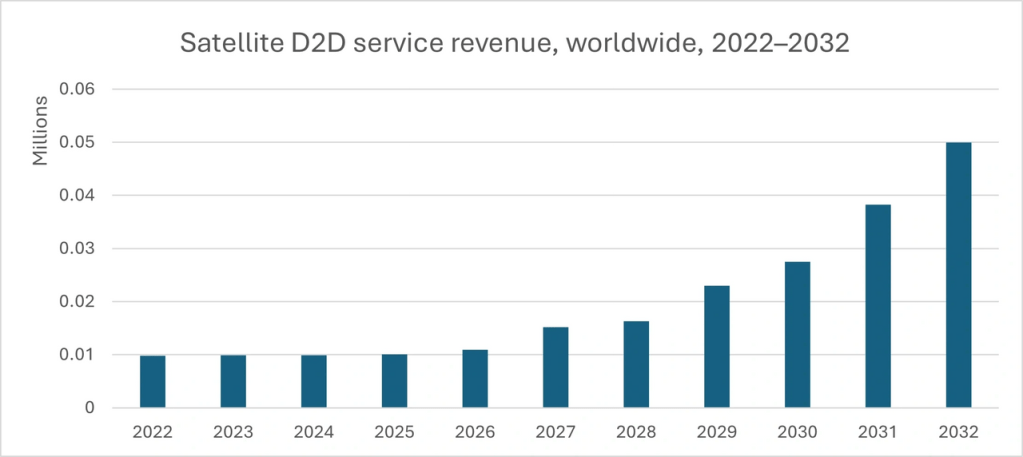
Satellite D2D could generate USD 137 billion in cumulative service revenue between 2022 and 2032.

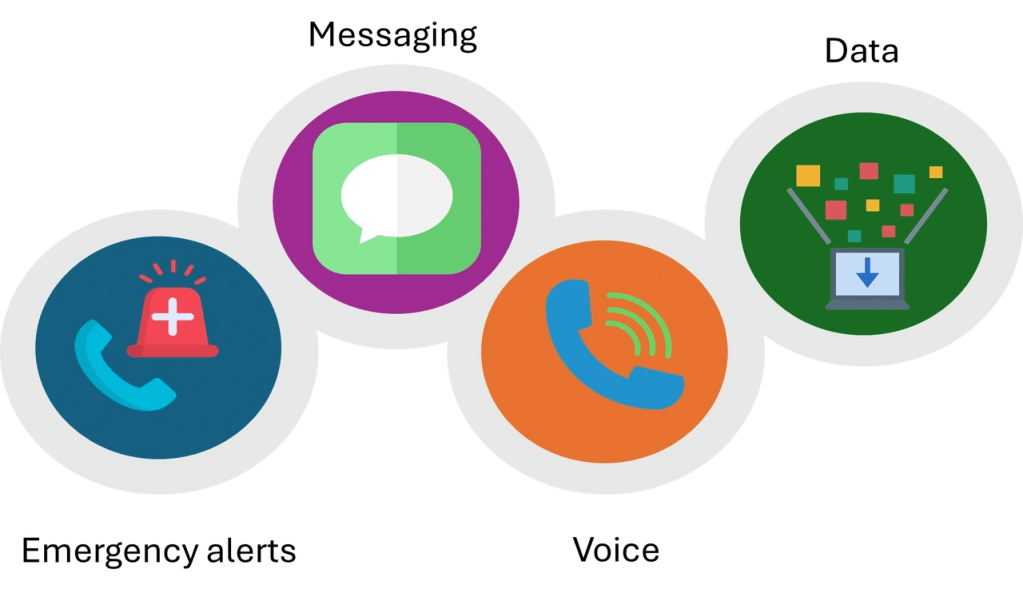
The technology will need to advance through four ‘waves’ or phases of connectivity capabilities:
Industry Outlook
Three major companies, SpaceX, AST SpaceMobile, and Lynk, are driving partnerships with operators in this space.

Smartphones with Satellite Connectivity
- Motorola Cat S75
- iPhone 14
- iPhone 14 Plus
- iPhone 14 Pro
- iPhone 14 Pro Max
- Huawei Mate 50
- Huawei Mate 50 Pro
- Huawei Mate 60 Pro
- Motorola Defy Satellite Link
- ZTE Axon 50 Ultra
Data source:
- NSR report “Satellite direct-to-device technology needs to evolve through four phases before reaching its full potential” March 2024.
- GSA report “Non-Terrestrial 5G Networks and Satellite Connectivity” August 2023.
- Analysys Mason report “Satellite direct-to-device: a new differentiator and growth engine for mobile operators” February 2023.


 Telecom Analysis
Leave a comment