

By Rolla Hassan, Ph.D
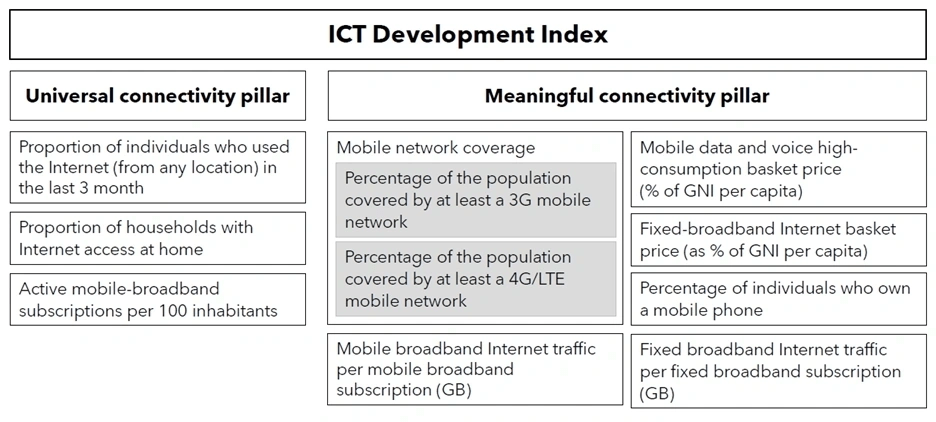
In 2021, as part of the Roadmap for Digital Cooperation of the Secretary-General of the United Nations, the International Telecommunication Union (ITU) and the Office of the UN Secretary-General’s Envoy on Technology (OSET) introduced a set of targets for universal and meaningful connectivity, to capture both the universality imperative and the quality imperative for connectivity to deliver on its promises.
Universal and meaningful connectivity (UMC) allows everyone to enjoy a safe, satisfying, enriching, and productive online experience at an affordable cost. The concept of UMC has gained considerable traction and is one of the two goals of the ITU strategic plan.
The objective of the IDI is thus to assess the extent to which a country’s connectivity is universal and meaningful.
Achieving universal connectivity implies connecting people, households, communities, and businesses. Universal connectivity for the people means anyone can connect regardless of their urban or rural location, gender, level of education, etc. Universal connectivity for households, communities and businesses means that the places where people live, work, learn and interact are connected.
Meaningful connectivity depends on several factors, called “connectivity enablers”: infrastructure, affordability, device, skills, and safety and security.
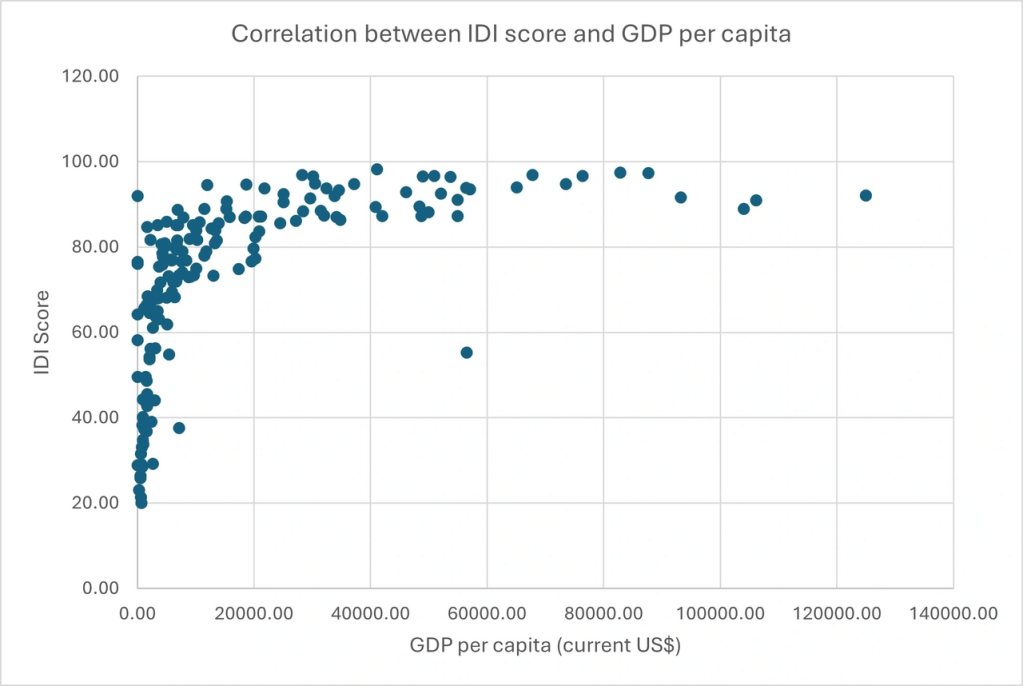
There is a positive correlation between IDI score and GDP per capita.
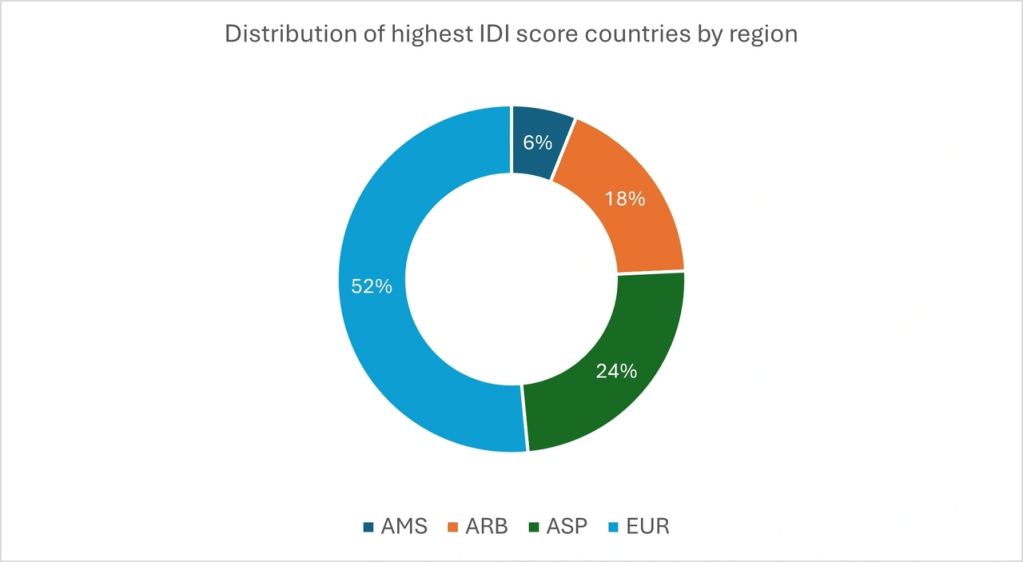
The highest IDI score by region is Europe, with 52%; Asia-Pacific, with 24%; the Arab region, with 18%; and the Americas, with 6%.
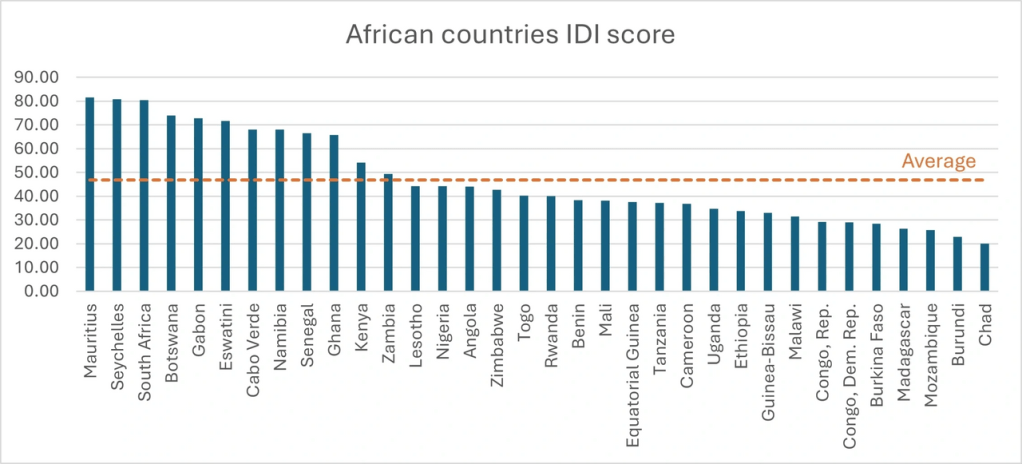
African countries IDI score
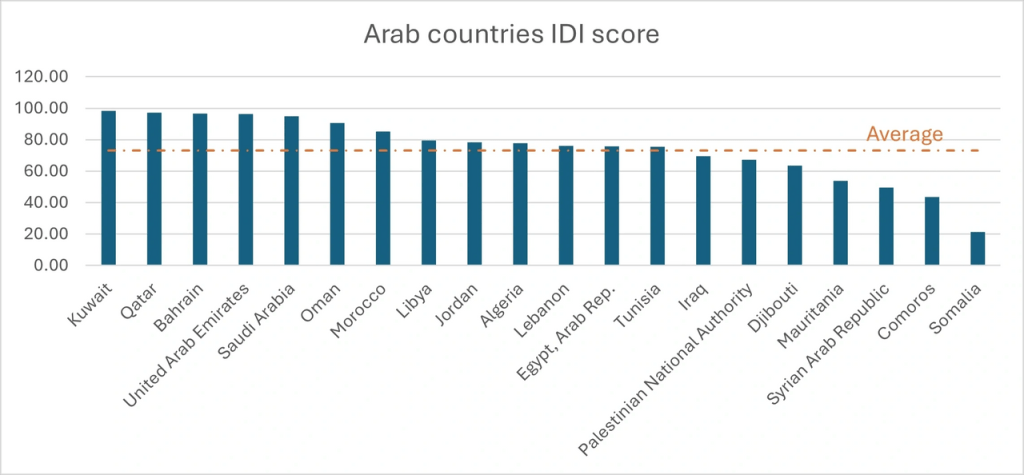
Arab countries IDI score
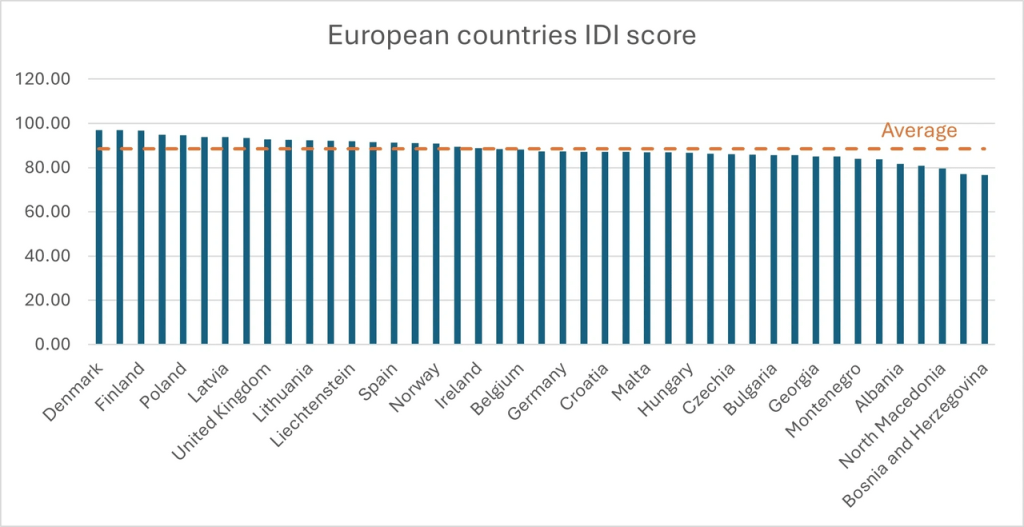
European countries IDI score


 Telecom Analysis
Leave a comment