

By Rolla Hassan, Ph.D
Introduction
The Digital Africa Index (DAI), developed by the GSMA, aims to assess and enhance the digital landscape across African nations. This comprehensive framework evaluates how effectively consumers, businesses, and governments leverage mobile technologies to foster socioeconomic development. The DAI is critical in identifying gaps in digital adoption and guiding policymakers in implementing effective strategies.
Purpose and Importance of the Index
The DAI serves multiple purposes:
- Benchmarking Digital Integration: It provides a detailed assessment of digital integration among African countries, moving beyond mere connectivity metrics to evaluate actual usage and adoption of digital technologies.
- Policy Guidance: The index helps governments understand the effectiveness of existing policies and regulations in promoting digital transformation, thereby identifying areas needing intervention.
- Comprehensive Assessment: By incorporating various indices such as the Digital Nations and Society Index (DNSI) and the Digital Policy and Regulatory Index (DPRI), the DAI offers a holistic view of digital progress across different sectors.
Structure of the Digital Africa Index
The DAI is structured around two main composite indices:
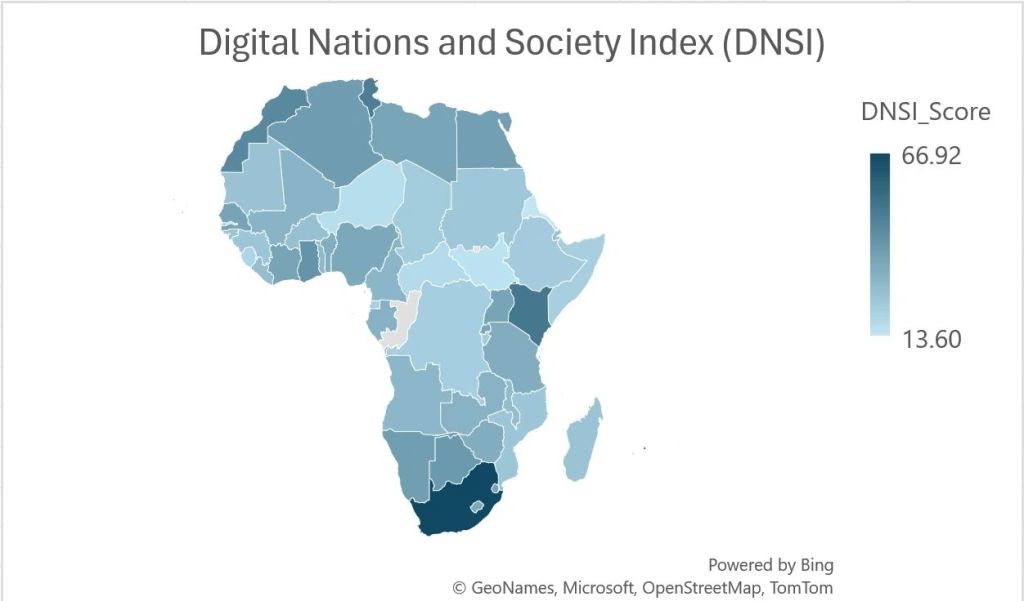
1- Digital Nations and Society Index (DNSI):
· Pillars: It consists of three primary pillars:
· Digital Consumer: Focuses on how individuals use mobile technologies for accessing services and engaging with content.
· Digital Business: Evaluate how enterprises adopt and integrate digital technologies.
· Digital Government: Assesses government initiatives in utilizing digital tools for public service delivery.
The map shows DNSI scores across African countries, with higher scores (darker blue) indicating more developed digital infrastructure and societal adoption.
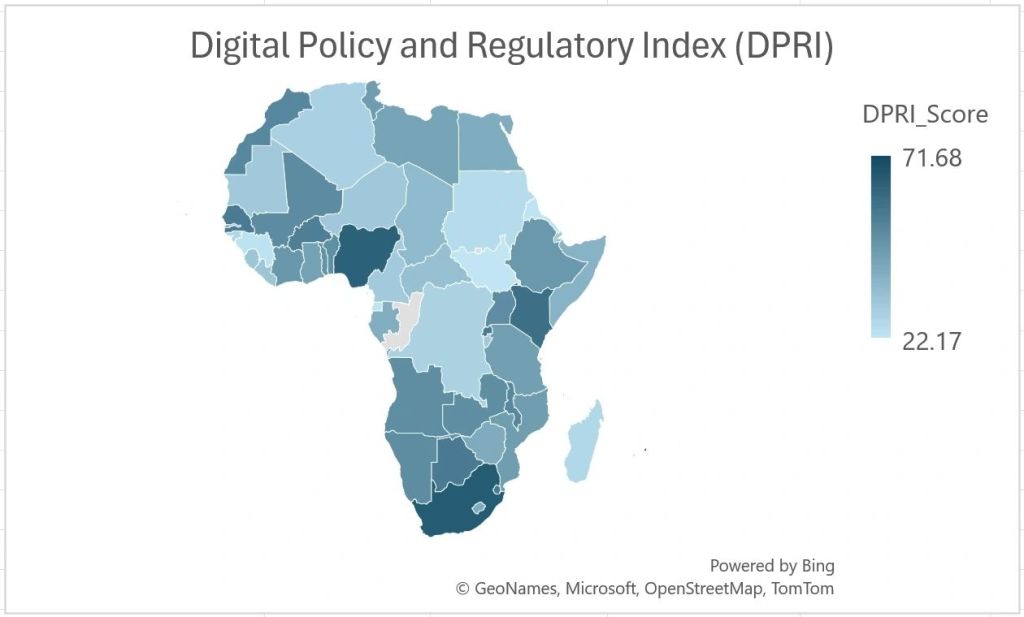
2- Digital Policy and Regulatory Index (DPRI):
· Pillars: This index comprises five pillars that analyze policy frameworks:
· Licensing and Spectrum: Examines the efficiency of spectrum allocation for mobile services.
· Consumer Protection: Evaluates consumer rights and data protection measures.
· Taxation: Looks at the impact of taxes on mobile services affordability.
· Network Deployment and Management: Assesses regulations facilitating infrastructure development.
· Public Policy: Reviews policies addressing barriers to digital access, especially for marginalized groups.
The scores range from 22.17 to 71.68, with darker shades of blue indicating higher DPRI scores.
Data Selection and Methodology
The construction of both indices relies on rigorous data selection criteria:
- Relevance: Indicators must accurately reflect the adoption or usage of digital technologies.
- Accuracy: Data should reliably estimate or describe the intended metrics.
- Coverage: Aims for comprehensive data representation across African countries.
- Timeliness: Ensures consistent data collection over time.
A further analysis was conducted to explore the relationship between the Digital Africa Index (DAI) and the Mobile Connectivity Index (MCI). This examination aims to understand how these indices correlate and influence each other in the context of digital transformation across African nations.
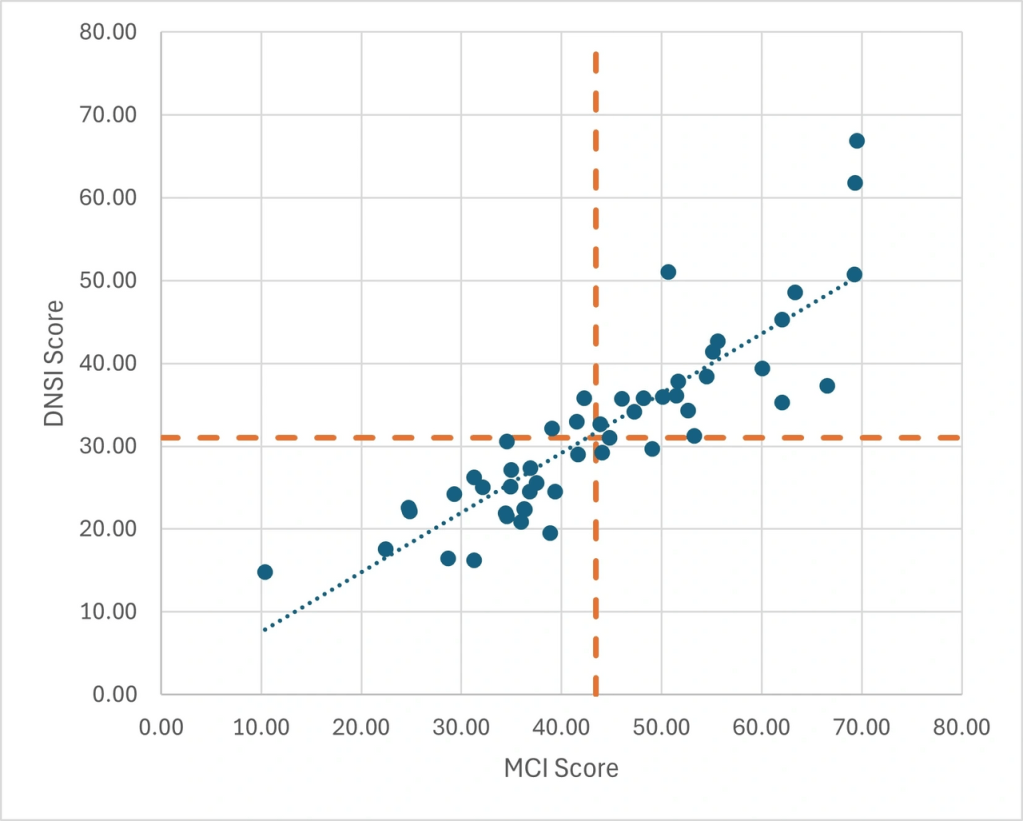
The graph below appears to show the relationship between MCI Score (x-axis) and DNSI Score (y-axis), represented as a scatter plot with a trend line. There is a clear positive correlation between MCI and DNSI scores.
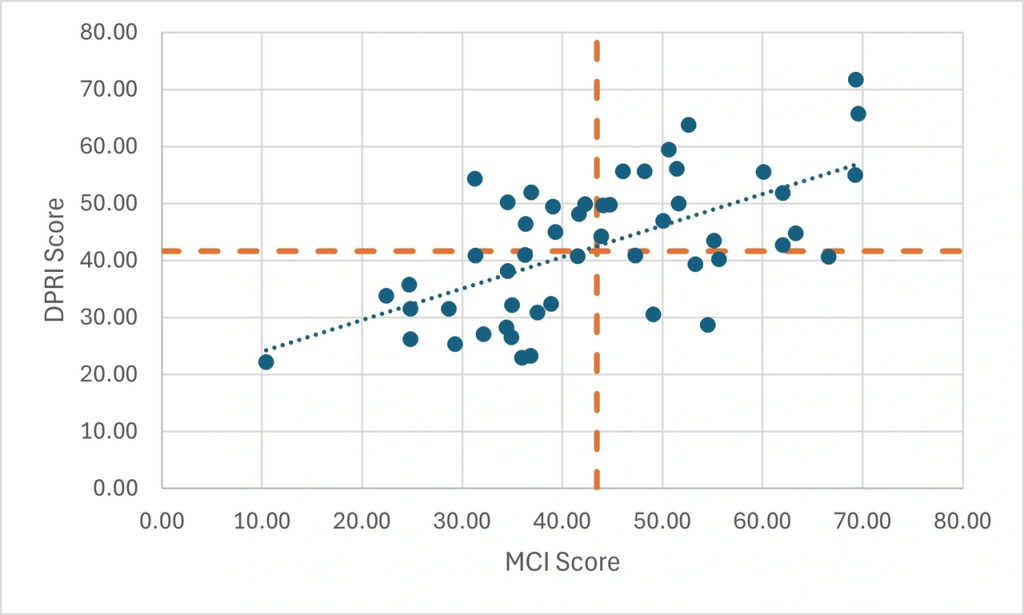
This graph shows the correlation seems moderate relationship between MCI Score (x-axis) and DPRI Score (y-axis) displayed as a scatter plot with a trend line.
Conclusion
The Digital Africa Index (DAI) offers a comprehensive framework to assess and guide digital transformation across the African continent. By combining the Digital Nations and Society Index (DNSI) and the Digital Policy and Regulatory Index (DPRI), the DAI provides a holistic view of digital progress, tracking both infrastructure/adoption and the enabling policy environment.
Significant digital divides exist within Africa, with southern and northern regions more digitally advanced compared to central areas.
The positive correlation between mobile connectivity (MCI) and both DNSI and DPRI scores suggests digital ecosystem maturity is closely linked to the underlying infrastructure.
The index empowers policymakers to identify gaps, implement targeted interventions, and accelerate inclusive digital development.
As a critical benchmarking and policy guidance tool, the Digital Africa Index plays a pivotal role in Africa’s digital transformation journey. By providing a detailed, multi-dimensional view of digital progress, the DAI helps unlock the continent’s vast potential and drive sustainable socioeconomic development through the strategic application of mobile technologies.
References
https://www.gsma.com/about-us/regions/sub-saharan-africa/digital-africa-index-en/


 Telecom Analysis
Leave a comment