

By: Rolla Hassan Ph.D
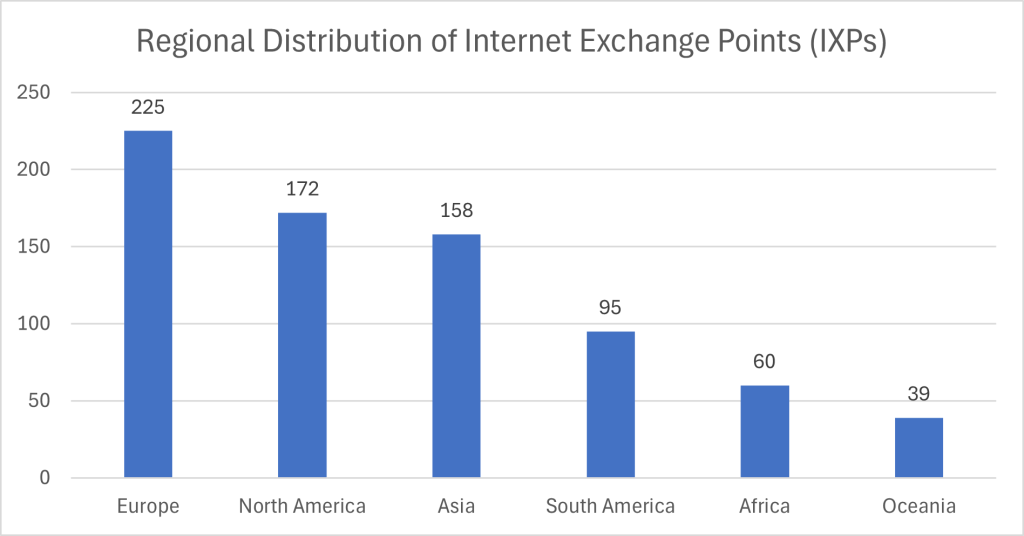
The internet, a vast and intricate web of interconnected networks, relies on critical infrastructure to ensure data flows efficiently and seamlessly across the globe. At the heart of this data exchange are Internet Exchange Points (IXPs), physical locations where internet service providers (ISPs), content delivery networks (CDNs), and other network operators come together to exchange traffic. The number of these crucial hubs has been steadily increasing, reflecting the world’s growing dependence on a fast, affordable, and reliable internet. As of October 2025, there are 763 active IXPs across 143 countries, a testament to their vital role in the internet ecosystem.

What is an Internet Exchange Point?
An Internet Exchange Point, or IXP, is a physical location where different internet networks connect to exchange traffic directly. Think of it as a major intersection on the information superhighway. Instead of sending data through long and sometimes expensive routes via third-party networks, IXPs allow for a more direct path. This direct connection, known as peering, is the foundation of a faster and more efficient internet.
At its core, an IXP is a sophisticated setup of switches and routers in a data center that facilitates the exchange of data packets between member networks. This seemingly simple concept has a profound impact on internet performance.
The Benefits of a Thriving IXP Ecosystem

Building a More Connected Future
The landscape of Internet Exchange Points represents both the remarkable progress and the persistent challenges facing global internet infrastructure. With 763 IXPs now operational across 143 countries, the world has built a sophisticated network of interconnection hubs that enable faster, more affordable, and more reliable internet access for billions of users. This infrastructure has become the invisible backbone supporting everything from remote work and online education to e-commerce and telemedicine.
However, the data reveals a story of stark inequality. While the United States alone operates 132 IXPs—more than 17% of the global total—entire regions struggle with limited infrastructure. Africa, home to 35 countries with IXPs, averages just 1.71 exchange points per country, compared to North America’s 12.29. This disparity translates directly into higher internet costs, slower speeds, and reduced economic opportunities for millions of people in underserved regions.
References
[1] Internet Society. “Internet Exchange Points (IXPs).” Available at: https://www.internetsociety.org/issues/ixps/
[2] Internet Society. (2020). “Explainer: What is an Internet Exchange Point (IXP)?” Available at: https://www.internetsociety.org/resources/doc/2020/explainer-what-is-an-internet-exchange-point-ixp/


 Telecom Analysis
Leave a comment